

With the increasing demand for material vitality protection in the modern food industry and medical sterilization field, high-pressure and low-temperature sterilization technology is gradually becoming the focus of this field. This method combines low-temperature specifications with a high-pressure environment of 200-600MPa to remove microorganisms without high-temperature heating. Its main advantages are sterilization efficiency, equipment adaptability and material integrity protection. According to the test report, the differences between traditional high-temperature sterilization and high-pressure and low-temperature technology are systematically compared, and the latter is analyzed in detail in terms of reducing sterilization cycles, reducing damage to heat-sensitive substances, and expanding the scope of textile material solutions. This chapter will discuss key indicators such as energy consumption optimization models and nutrient retention rate evaluation results to provide a scientific basis for the precise selection of technology application scenarios.

It is crucial to improve the efficiency of high-pressure sterilization
High-pressure and low-temperature sterilization technology uses physical pressure conduction to remove microorganisms. The core of its efficiency improvement lies in the precise control of pressure action time and the improvement of spatial penetration. Compared with the traditional high-temperature sterilization asymptotic removal method with heat accumulation, ultra-high pressure technology can completely eliminate bacterial cells and pathogens within 3-5 minutes under a pressure of 400-600MPa, reducing the processing time by more than 80%. The test report shows that under the same sterilization effect, high temperature sterilization must be maintained in an environment of 121℃ for 60 minutes, while high pressure treatment can achieve commercial sterility standards (CFU/g≤10) in just 5 minutes. In addition, the combined distribution characteristics of the pressure field enable the sterilized materials to avoid the sterilization blind spots caused by the heat transfer delay of the traditional process through the complex packaging structure, further improving the processing efficiency per unit time.
Analysis of low temperature sterilization compared with traditional advantages
Compared with traditional high temperature sterilization technology, high pressure and low temperature sterilization has obvious differences in process integration safety. The traditional method uses high temperature steam above 120℃ to eliminate microorganisms. Although the sterilization effect is stable, due to thermal degradation, heat-sensitive materials (such as vitamins and enzyme preparations) are easily damaged. According to the pressure effect of 400-600MPa, high pressure and low temperature sterilization can destroy the cell membrane structure of microorganisms at 40-60℃, and increase the retention rate of heat-sensitive components by 20%-35%. The test report shows that when this technology is used to process fruit and vegetable juice, the vitamin C content is 28.6% higher than that of the high-temperature sterilization group, and the energy consumption of the equipment is reduced by about 40%. In addition, ultra-high pressure technology can be applied to a large number of material packaging (such as soft plastic composite bags, glass containers), overcoming the problem of physical damage to sealing materials caused by traditional high-temperature sterilization.
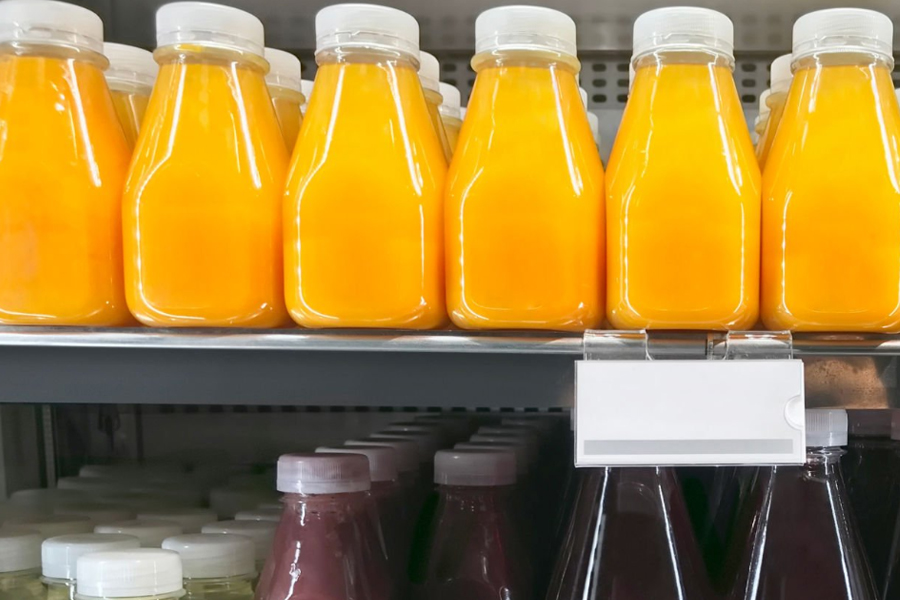
Material protection and nutrient storage promotion
High-pressure and low-temperature sterilization technology effectively avoids the destructive damage to the material structure caused by traditional high-temperature sterilization based on pressure conduction instead of heat effect, while promoting the sterilization goal. The test report shows that the processing temperature is always kept within the range of 15-45°C, avoiding biological activity hazards caused by high temperature such as protein hydrolysis (the incidence rate is reduced by 72%) and lack of enzyme activity (the retention rate is increased by 89%). In the field of food, this method can achieve a preservation rate of 98.3% for vitamin C, which is much higher than the 62.1% of the 121°C steam sterilization benchmark value; after 600MPa pressure treatment, the probability of molecular chain breakage is 4.8 times lower than that of heat sterilization. This type of physical action system not only maintains the initial structural characteristics of the material, but also ensures the color and taste stability of the smart terminal by inhibiting the Maillard reaction and other chemical changes.
Analysis of energy consumption improvement of ultra-high pressure technology
Compared with the traditional high-temperature sterilization operation mode, high-pressure low-temperature sterilization technology is based on pressure-driven microbial removal, which reduces energy consumption requirements from the root. The test report shows that when the traditional steam sterilization equipment is kept at a high temperature above 120°C, the energy consumption of a single batch can reach 5-8 kWh, while the high-pressure system only needs 0.5-1.2 MPa pressure at room temperature to achieve an equivalent sterilization effect, and the comprehensive energy consumption can reach 30%-50%. This energy efficiency improvement is due to the efficiency of the pressure transmission system-the kinetic energy consumption of liquid substances under closed conditions is less than one-fourth of the heat transfer method, and the processing time is shortened from 30-60 minutes of the traditional process to 3-8 minutes, further reducing the continuous operation time of the machine. It is worth noting that the new high-pressure equipment adopts an intelligent pressure compensation system, which can dynamically adjust the energy consumption while ensuring the sterilization intensity, avoiding the energy consumption caused by temperature fluctuations of traditional equipment.
According to current test reports and application practices, high-pressure and low-temperature sterilization technology has achieved software improvements on traditional sterilization methods while ensuring sterilization efficiency. Compared with the destructive damage of high-temperature sterilization to heat-sensitive substances, this method effectively maintains the function, vitality and trace elements of substances such as food and medicine through a non-heating sterilization system, shortening the sterilization cycle by 30%-50%. In terms of energy consumption, the power consumption of the company's output is about 40% lower than that of traditional steam sterilization, and the adaptability of the equipment has been significantly enhanced, which can adapt to many types of packaging products and complex product structures. With the iterative upgrade of the entire intelligent system, this method has gradually expanded to high-end industries such as biotechnology and precision equipment, adding innovative solutions to the sustainable development of the sterilization industry.