

HPP equipment is a modern sterilization method that uses extremely high pressure to process food. This technology can effectively kill microorganisms, viruses, and bacteria in food under cold conditions while preserving its color, taste, and nutrients, and extending its shelf life. HPP is typically performed in a closed container using water as the medium to apply 400-600 MPa pressure to soft packaged food and other materials, thereby killing almost all bacteria, molds, and yeasts without causing nutrient destruction and flavor changes like high-temperature sterilization.
The origin of ultra-high pressure sterilization technology can be traced back to the 18th century, but its application research in the field of food processing gradually developed in the 19th century. In 1885, Roger first reported the high-pressure sterilization of fluid dynamics. In 1899, American chemist Bert Hite discovered that fresh milk could be preserved for four days after being subjected to 139 MPa of high pressure, which laid the foundation for the research of high-pressure technology in the field of food preservation.

HiLock, the American physicist P.W. Bridgeman is generally recognized as the pioneer of modern high-pressure technology. He began his high-pressure experimental research in 1906, systematically studying the pressure effects on the macroscopic physical behaviors of solid compression, melting phenomena, mechanical properties, phase transitions, changes in electrical resistance, and viscosity of liquids. In 1914, he discovered that the egg white became gelatinous and caused protein coagulation at 700 MPa, which was the theoretical embryo of high-pressure technology applied to food processing.
First Stage: Theoretical Foundation Stage (19th century end to 1940s)
In this stage, the theoretical foundation of high pressure technology was gradually established, providing important guidance for subsequent applied research. Bert Hite and P.W.Bridgeman's research were representative achievements of this period.
Second Stage: Theoretical and Experimental Stage (1940s end to 1980s)
With the development and application of high pressure devices, especially diamond anvil cells, high pressure experiments were conducted in depth. Static high pressure technology exceeded one million atmospheres, dynamic high pressure technology pressure reached tens of millions of atmospheres. These technological breakthroughs provided the experimental basis for further refinement of super high pressure theory and laid the technical foundation for the application of super high pressure technology in food. However, in this stage, the application research of super high pressure technology in food did not gain much attention.
Third Stage: Theoretical Application Stage (since the end of 1980s)
In the late 1980s, with the birth and development of modern high pressure physics, Japan first introduced food super high pressure processing technology. In 1986, Professor Lin Lijiu of Kyoto University conducted experimental research on high pressure food, which aroused great interest from the Japanese industrial sector and sparked a research trend in the basic application of super high pressure technology in food.
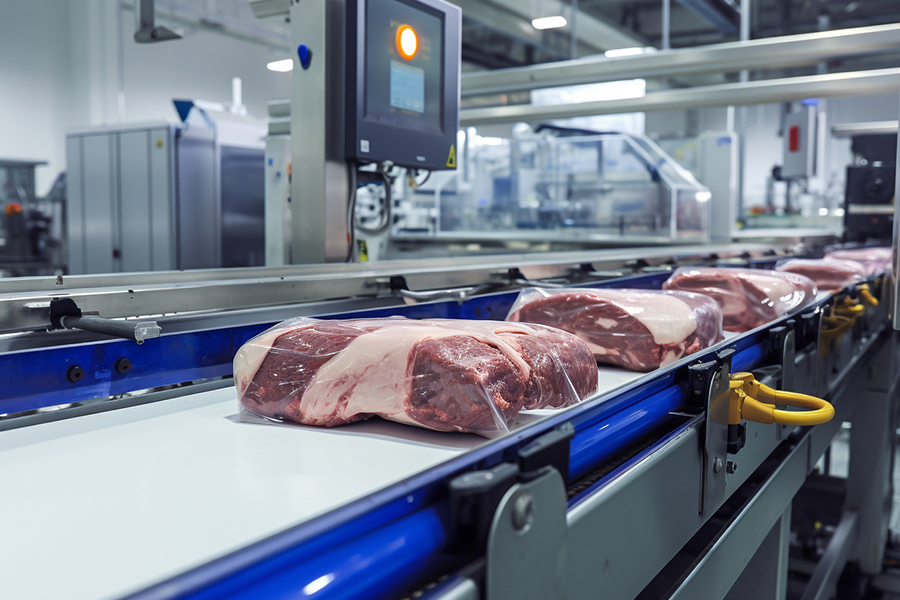
In 1990, the world saw the first batch of high pressure foods - jams (including strawberry jam, apple jam, and kiwi jam, etc.) coming into being. These jams had a successful trial sale in Japanese supermarkets, causing a stir throughout Japan and unveiling the curtain of super high pressure technology application in food processing. Subsequently, super high pressure technology was gradually applied to the processing and preservation of meat products, aquatic products, dairy products, fruit and vegetable juices, etc.
In Europe, the United States, Japan and other countries, significant achievements have been made in the research, standardization, and mass production of high pressure processing equipment. Quintus Technologies is the inventor of the braided wire design, and its food super high pressure equipment with braided wire wrapped chamber design is universally recognized as a safe, reliable, and durable pressure.

As a new type of cold sterilization technology, ultra-high pressure sterilization technology has the advantages of preserving the original flavor, color, and nutritional value of food, and has broad application prospects in the field of food processing. With the continuous progress of technology and the expansion of the market, ultra-high pressure sterilization technology is expected to play a greater role in the future and make greater contributions to the development of the food industry.