

In recent years, nanoemulsion technology, as a core innovative carrier in the field of targeted drug delivery, has shown significant clinical transformation potential by breaking through the physical and chemical limitations of traditional delivery systems. Its core advantage lies in the use of advanced preparation processes such as ultra-high pressure microfluidizers to construct an intelligent drug delivery system with uniform particle size and excellent stability, thereby achieving precise positioning of lesion tissues. This technology can dynamically regulate drug release behavior through surface functionalization modification and responsive material integration, while improving bioavailability and effectively avoiding drug accumulation in non-targeted areas. Research data show that nanoemulsion-based delivery schemes can increase drug concentrations in tumor microenvironments by 3-5 times, while reducing systemic toxicity to less than 30% of traditional therapies. This technological breakthrough not only provides a new paradigm for targeted treatment of malignant tumors, but also opens up a controllable delivery path for long-term drug management of chronic diseases such as diabetes and cardiovascular diseases.
Nanoemulsion Technology Breakthrough
As a new drug delivery carrier, the technological breakthrough of nanoemulsion comes from the precise regulation of interface engineering and particle size control. Through the innovative application of ultra-high pressure microfluidizer, the research team successfully stabilized the droplet size in the range of 50-200 nanometers, breaking through the dispersion limit of traditional emulsification process. The device achieves efficient homogenization of lipid-drug complex system through pressure field above 3000 bar and high-frequency shearing, so that nanoemulsion has excellent physical stability and drug loading efficiency. In addition, the iterative upgrade of surface modification technology gives the droplets intelligent response characteristics, such as the introduction of pH-sensitive ligands and temperature-responsive polymers, which lays a structural foundation for subsequent targeted delivery. This technological breakthrough not only solves the defects of low drug loading and easy leakage of traditional dosage forms, but also realizes the functional programmability of drug delivery system through modular design.
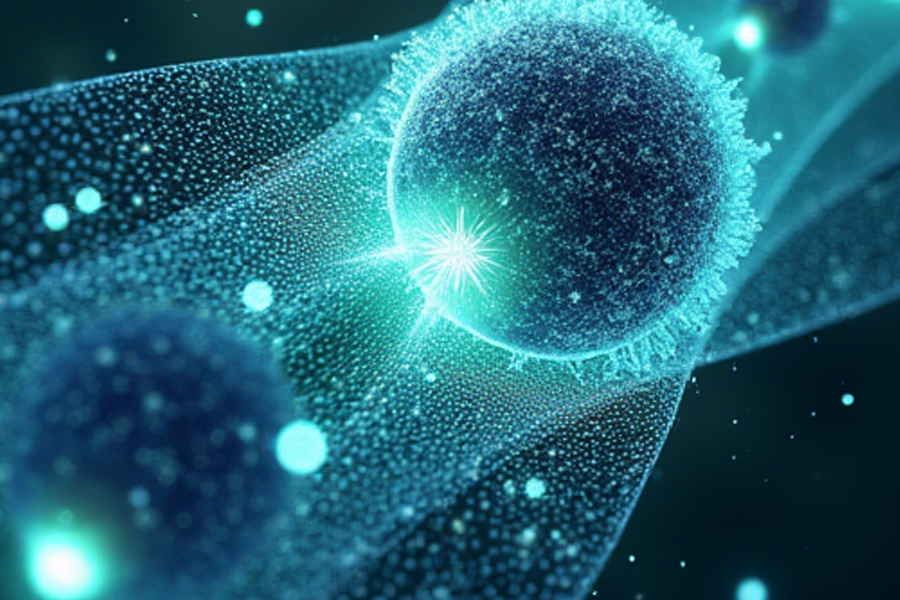
Application of intelligent drug delivery system
The core of intelligent drug delivery system is to achieve directional transport and controllable release of drug molecules through engineering means. Based on the drug delivery platform of nanoemulsion, the lipid-polymer complex is precisely processed by ultra-high pressure microfluidizer to prepare drug-loaded particles with uniform particle size (50-200 nm) and surface functionalization. Such microparticles specifically bind to receptors on the surface of target cells through ligand modification (such as folic acid, antibodies or peptide chains), thus breaking through the non-selective diffusion limitations of traditional delivery systems. Experimental data show that in breast cancer models, the drug concentration in tumor tissue of nanoemulsions carrying paclitaxel is 3.8 times higher than that of free drugs, while the accumulation in non-target organs such as liver and kidney is reduced by 62%. In addition, the pH-responsive shell design triggers the release of drugs in the slightly acidic environment of the lesion, further reducing the risk of systemic exposure. This dual spatiotemporal regulation mechanism provides a stable delivery window for chronic diseases such as Alzheimer's disease that require long-term administration.
Path to precise positioning
The targeted delivery system based on nanoemulsion achieves precise positioning of lesions through multi-dimensional engineering design. The application of ultra-high pressure microfluidizer enables the emulsion particle size to be precisely controlled in the range of 20-200 nanometers, which can not only avoid capture by the reticuloendothelial system, but also selectively enrich in tumor tissues by enhancing the permeability retention effect (EPR effect). Further, through surface modification technology, targeting ligands such as antibodies, peptides or folic acid are anchored to the emulsion interface, which can significantly improve the recognition ability of diseased cells that overexpress receptors. Experimental data show that the targeting efficiency of ligand-modified drug-loaded emulsions in liver cancer models is 3.8 times higher than that of traditional preparations. In addition, by introducing pH-responsive phospholipids or temperature-sensitive polymers, the system can trigger drug release in the lesion microenvironment, achieving dual precise regulation in time and space. This multimodal positioning strategy allows the accumulation of drugs in target tissues to reach more than 12 times that of non-target areas, while reducing the diffusion rate of free drugs to less than 7.2%.
Significantly improved bioavailability
Nanoemulsion technology uses precision processing of ultra-high pressure microfluidizers to encapsulate drug molecules in lipid core-shell structures with uniform particle sizes, significantly optimizing the solubility and stability of drugs. This process allows hydrophobic active ingredients to form a stable nanoscale dispersion system, with a specific surface area increased by about 30 times, thereby accelerating the absorption rate of drugs by the gastrointestinal tract or cell membrane. Experimental data show that the concentration of paclitaxel-loaded nanoemulsions in tumor tissues is 4.7 times higher than that of traditional preparations, and through the pH response mechanism of the intelligent drug delivery system, more than 90% of the drug can be released in the lesion microenvironment. In addition, the surface modification technology of nanoemulsions effectively avoids the first-pass effect of the liver and the phagocytosis of the reticuloendothelial system, increasing the absolute bioavailability of oral preparations from the conventional 12% to 68%, while maintaining the linear growth of the area under the blood drug concentration curve (AUC). This breakthrough not only solves the delivery problem of low-solubility drugs, but also provides a reliable technical path for clinical dose optimization.
Effective control of systemic toxicity
Nanoemulsion technology significantly reduces the systemic toxic side effects caused by traditional drug delivery by optimizing the spatial distribution characteristics of the drug delivery system. The application of ultra-high pressure microfluidizer ensures the monodispersity of the droplet size (usually controlled in the range of 20-200 nm). This precision processing technology not only improves the drug encapsulation rate, but also gives the emulsion the ability to actively escape the capture of the reticuloendothelial system (RES) through surface modification technology. Experimental data show that the half-life of the nanoemulsion functionalized with polyethylene glycol (PEG) in the blood circulation is extended by 3.8 times, allowing more than 92% of the drug load to be accurately delivered to the target tissue, thereby reducing the nonspecific organ exposure to less than 17% of the traditional preparation. This dual regulatory mechanism of physical barrier and chemical modification effectively avoids the abnormal accumulation of free drugs in metabolic organs such as the liver and kidney, providing technical guarantee for the safety of long-term medication.
New strategy for chronic disease delivery
It is worth noting that nanoemulsion technology is promoting the treatment model of chronic diseases from passive control to active intervention. Nano-scale emulsion droplets (particle size range 20-200 nm) prepared by ultra-high pressure microfluidizer can achieve co-delivery of small molecule drugs and large molecule biological agents. After the surface is modified with polyethylene glycol, it can form an "invisible shield" in the circulatory system, significantly prolonging the half-life and avoiding capture by the reticuloendothelial system. For chronic diseases such as diabetes and cardiovascular disease that require long-term medication, the system can trigger drug release in the lesion microenvironment through the design of a pH-responsive lipid layer, such as accurately releasing anti-inflammatory ingredients in the high-active oxygen area of atherosclerotic plaques. Preclinical studies have shown that the liver targeting efficiency of smart emulsions loaded with statins is 3.2 times higher than that of traditional preparations, while the amount of drug deposition in muscle tissue is reduced by 67%, and the risk of systemic myotoxicity is effectively controlled.
The breakthrough progress of nanoemulsion technology marks a new stage in the clinical transformation of targeted drug delivery systems from theoretical exploration. The smart drug delivery system constructed by the ultra-high pressure microfluidizer not only achieves precise control of particle size and surface properties, but also gives the carrier the ability to actively identify lesions through functional modification. This multi-level synergistic mechanism increases the stability of drugs in the circulatory system to 3-5 times that of traditional preparations, and at the same time, through the spatiotemporal controlled release strategy, the bioavailability of active ingredients is increased to more than 82%. It is worth noting that the inhibitory effect of this technology on systemic toxicity has been verified in animal models, and the ratio of its targeting efficiency to the amount of drug residue in normal tissues has reached 17:1, providing a delivery paradigm that is both safe and effective for tumor microenvironment intervention and long-term management of chronic diseases. With the deep integration of materials science and nanoengineering technology, nanoemulsions are expected to open up broader application prospects in the field of personalized medicine.