

However, many plastic products using conventional calcium carbonate become brittle, chalky, or prone to cracking over time. The root cause lies in the poor particle performance of untreated calcium carbonate and the limits of traditional processing technologies.
The Challenge: Particle Defects in Calcium Carbonate for Plastics
The quality of plastics reinforced with calcium carbonate depends heavily on particle properties. Traditional particles often create structural weaknesses:
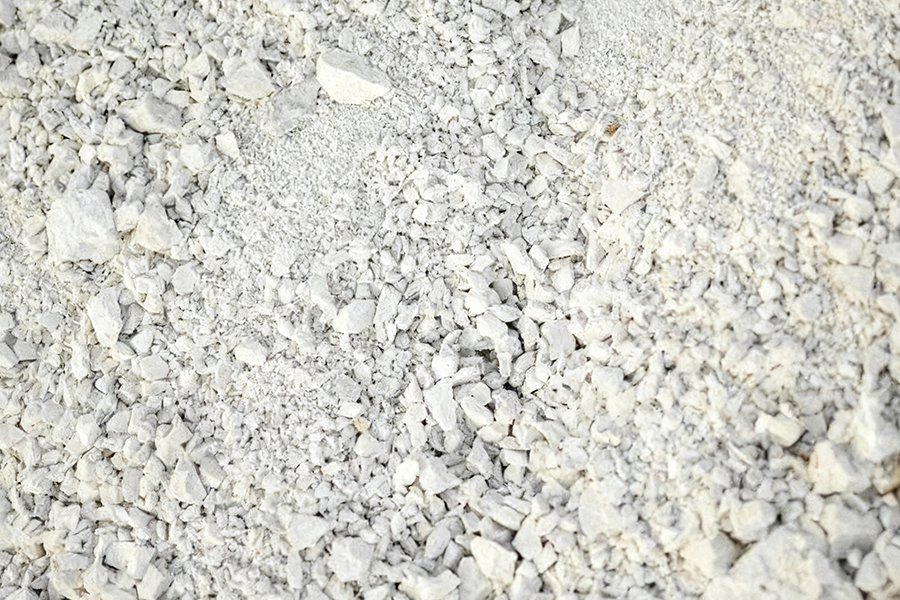
● Coarse, uneven particles: Large, irregular grains act like sand inside molten plastic.This leads to internal stress and cracking when the plastic is exposed to force or temperature change.
● Agglomeration issues: Ordinary calcium carbonate easily clumps together, creating visible “defect points” in molded plastics, reducing surface smoothness and mechanical strength.
● Poor compatibility with polymers: Coarse particles bond weakly with the polymer matrix. Over time, this causes powdering and reduced durability in plastic surfaces.
Because of these problems, conventional calcium carbonate can only serve low-end applications, failing to meet the durability and aesthetics demanded by high-end plastics such as automotive interiors and premium appliance housings.
The Limitation of Traditional Calcium Carbonate Processing
Industry-standard methods such as ball milling and carbonation synthesis both have critical drawbacks.
Ball milling creates uneven particle sizes due to uncontrolled impact force, while carbonation produces particles that are too smooth, reducing their adhesion to plastics.
Neither method can achieve uniform, nano-scale Calcium Carbonate with strong dispersion and high polymer compatibility — a major limitation for advanced plastic manufacturing.
The Solution: High Pressure Microfluidizer Technology
The High Pressure Microfluidizer revolutionizes how Calcium Carbonate is processed for plastics.
By applying extremely high pressure, the Microfluidizer turns conventional coarse particles into nano-scale, uniform, and well-dispersed Calcium Carbonate with enhanced polymer compatibility.
In this process, Calcium Carbonate is first dispersed into a water-based slurry. A High Pressure Microfluidizer pump then compresses the suspension to hundreds of megapascals.
The slurry is forced through micro-channels only a few micrometers wide, generating intense impact, shear, and cavitation inside the interaction chamber.
This breaks down particles into uniform nano-sized Calcium Carbonate, while also creating surface textures that prevent agglomeration and improve adhesion to plastics.
The High Pressure Microfluidizer achieves precise, repeatable results, making it ideal for continuous, large-scale plastic production.
Benefits: Microfluidized Calcium Carbonate Improves Plastic Quality
Using High Pressure Microfluidizer technology, Calcium Carbonate becomes a high-performance additive that dramatically upgrades plastic properties:
● Higher strength and durability:Nano-scale uniformity distributes stress evenly, improving tensile strength by up to 30%. Plastics such as PVC pipes become more impact-resistant and last over five years.
● Smoother and more aesthetic surfaces:No particle clumping means smoother finishes — perfect for high-end home appliances, toys, and color-consistent products.
● Eco-friendly and cost-efficient: The Microfluidizer process needs no chemical additives, cutting production cost and energy use while supporting safe, sustainable plastic manufacturing.
High Pressure Microfluidizer Drives the Next Leap in Plastics
China’s Calcium Carbonate for plastics market reached ¥2.9 billion in 2024, growing at 8% annually. Yet, fewer than 7% of plastic manufacturers use High Pressure Microfluidizer technology.As demand grows for lightweight automotive materials and premium smart-home components, the adoption of Microfluidizer-processed Calcium Carbonate will accelerate rapidly.
High Pressure Microfluidizer technology solves long-standing challenges in plastics, supporting the industry’s move toward stronger, more durable, and sustainable materials.
It not only enhances everyday product performance but also drives the high-quality development of the trillion-yuan plastic industry.