

Industry Challenge: Balancing Convenience and Fresh Quality
The main challenge for ready-to-eat mushroom soup producers is achieving both freshness and convenience. Current processing methods lead to:
1. Inferior taste and texture – Mushrooms lose their tender crispness and become rubbery or fibrous. Umami compounds such as glutamic acid break down during heat treatment, resulting in a dull flavor.
2. Dependence on preservatives – Traditional thermal processes require chemical additives to suppress microbial growth. Flavor enhancers are often used to compensate for lost aroma, conflicting with the clean-label trend.
3. Short shelf life – Without preservatives, ready-to-eat mushroom soup typically has a 1–2 month shelf life at ambient temperature, making logistics and retail storage difficult.
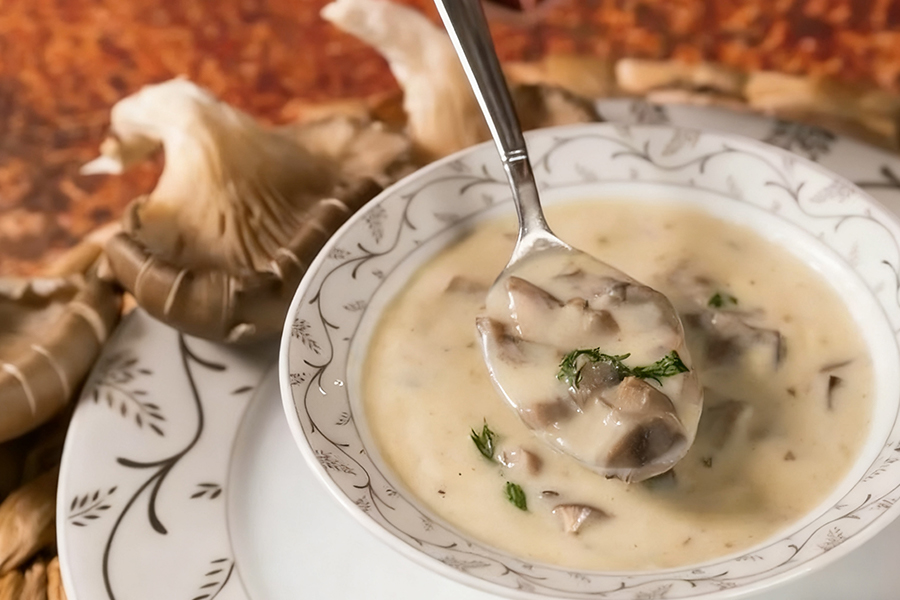
Root Cause: Irreversible Damage from Thermal Processing
Conventional sterilization depends on high-temperature processing—typically 121 °C for 20–30 minutes—to destroy bacteria and spores. However, this causes irreversible texture and flavor damage.
High heat breaks down mushroom cell walls, resulting in nutrient loss and a fibrous texture. It also degrades amino acids, glutamates, and B vitamins, reducing umami and nutrition. Moreover, heat-resistant spores can survive, forcing manufacturers to rely on chemical preservatives to ensure safety.This “high temperature + preservative” cycle has long limited product innovation in the ready-to-eat mushroom soup market.
The HPP Solution: Low-Temperature High Pressure Processing
High Pressure Processing (HPP)—a non-thermal sterilization method—offers a breakthrough for ready-to-eat mushroom soup manufacturers seeking clean-label and fresh-quality products.
The process involves placing sealed soup packages into a pressure vessel filled with water and applying 600 MPa (87,000 psi) for 3–5 minutes. Under this intense pressure, microbial cells are crushed and inactivated without heat.
Because HPP operates below 25 °C, mushroom texture, umami flavor, and nutrients are preserved, creating a product that tastes freshly made while remaining shelf-stable.
Key Benefits of HPP for Ready-to-Eat Mushroom Soup
Compared with conventional high-temperature sterilization, HPP High Pressure Processing delivers major advantages:
1. Superior quality – Mushrooms retain their crisp bite, and the broth maintains rich umami flavor.
2. No preservatives – HPP completely inactivates pathogens and spores, extending shelf life up to 6 months at room temperature without additives.
3. Higher nutritional value – B vitamin and amino acid retention is up to 60% higher than in thermal-treated soups.
4. Operational efficiency – Each HPP batch can process 200–500 packs, doubling throughput and reducing package deformation and waste from 8% to 1%.

Market Outlook: HPP Drives Next-Gen Ready-to-Eat Soups
China’s ready-to-eat soup market is growing at 15% annually and is projected to exceed ¥20 billion by 2025. The strongest demand growth comes from no-additive, clean-label mushroom soups. Consumer interest in clean labels has risen 30% over the past three years, opening new opportunities for HPP High Pressure Processing technology.
HiLock, with over 15 years of HPP experience and 40+ patents, provides scalable High Pressure Processing systems—from pilot units for small producers to industrial lines processing tens of thousands of packs per hour. HiLock systems cost 20% less than imported units and are already used by manufacturers across 30 provinces. Some HPP-treated mushroom soups have passed export inspection and entered Southeast Asian markets.
As HPP technology continues to advance, it will redefine ready-to-eat mushroom soup from a simple convenience product into a premium, clean-label meal, combining shelf stability with fresh-made taste.