

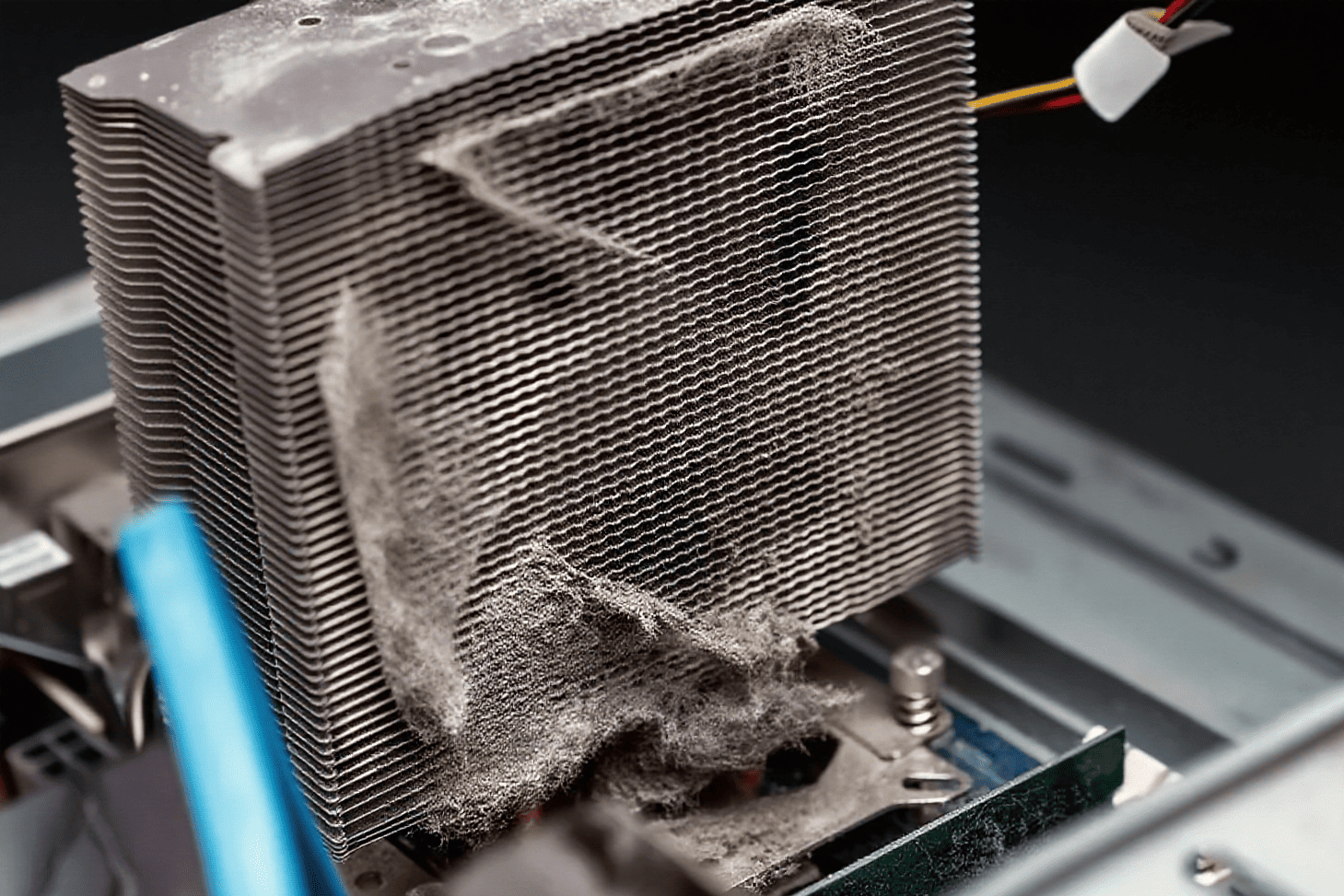
However, during actual use, problems such as slow heat dissipation and device crashes often occur. Upon inspection, it is often found that the filter material of the filtration system has deformed, with large amounts of dust blocking the filter pores, causing the device to “breathe poorly.” In industrial applications, the challenges are even greater. Long-term high-load operation causes the filter’s efficiency to decline rapidly, failing to block impurities effectively and leading to damage of precision components.
Maintenance costs rise sharply. These seemingly scattered failures are, in fact, common industry-wide problems of electronic filtration devices. Traditional processing technologies have never been able to produce filters that are structurally stable, highly efficient, and durable.
The Core Problems of Traditional Electronic Filtration Devices
The weaknesses of traditional electronic filtration devices can be summarized in three main points:
Structural Deformation
Most filter materials are pressed from ceramics or metal powders. With traditional manufacturing processes, the internal density of the filter is uneven. In environments with vibration or temperature changes, the filters easily crack or deform, causing filter gaps to expand and allowing impurities to pass through.
Unstable Filtration Efficiency
Even with filters of the same design, performance differs greatly between batches. Some can filter 99% of impurities, while others only achieve 85%. Such inconsistency cannot meet the high-precision filtration requirements of modern electronic equipment.
Poor Durability
In high-temperature and high-humidity industrial environments, traditional filters typically last only 3–6 months before aging or pore clogging leads to failure. Frequent replacement not only increases cost but also disrupts operation.
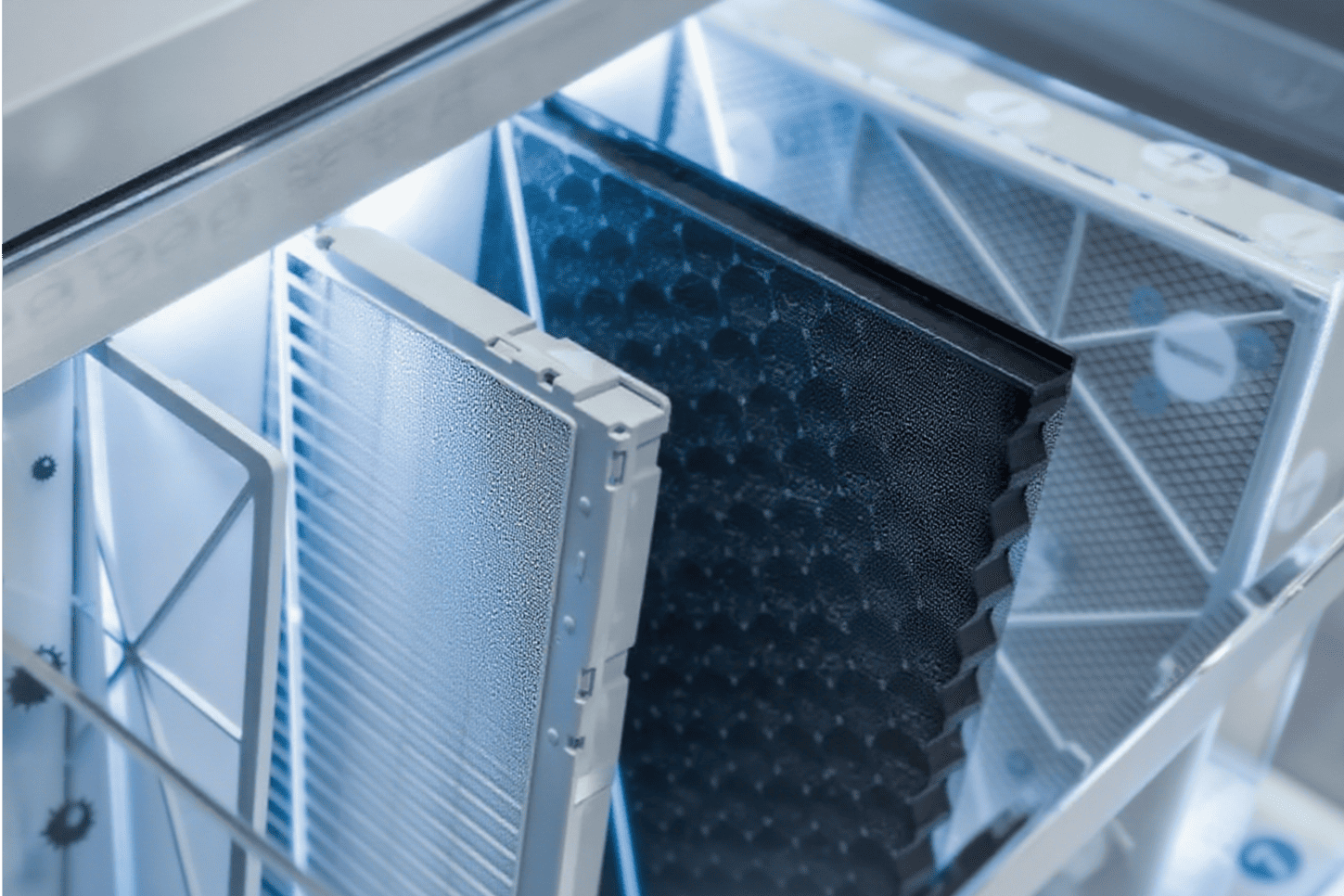
The root cause of these issues lies in the limitations of traditional manufacturing technology. The filter material is the key to electronic air purifier filtration, requiring high density, uniform porosity, and high strength.
Traditional processing relies mainly on mechanical pressing + high-temperature sintering. Ceramic or metal powders are mechanically pressed into molds and then hardened by sintering. However, mechanical pressing applies pressure only from top to bottom, resulting in uneven density—higher at the surface but lower inside. This is like a bun that is hard outside but soft inside, making it prone to deformation under stress. While high-temperature sintering strengthens the material, it also causes pores to shrink unevenly: some small pores become blocked, while large pores grow larger, making filtration precision unstable. Furthermore, the high heat often creates micro-cracks, reducing durability in harsh environments.
Why Isostatic Pressing Is the Key
To overcome these problems in the production of electronic air purifier filtration devices, the adoption of Isostatic Pressing equipment is crucial.
Isostatic Pressing is a “multi-directional compression” technology. It places the filter body into an elastic mold and immerses it in a high-pressure medium (such as oil, water, or gas). Then, under temperatures ranging from 80°C to 1200°C (depending on material) and pressures of 100–600 MPa, the medium transmits pressure evenly to every part of the filter. This creates highly uniform density inside the material. Combined with precise temperature control, the pores form evenly, avoiding cracks and deformation during shaping.
HiLock has developed advanced Isostatic Pressing equipment with outstanding temperature and pressure control. It is especially effective in producing filtration systems for electronic air purifiers and other sensitive electronic devices.
Performance Advantages of Isostatic Pressing
1. Structural Stability
With Isostatic Pressing, the uniformity of density in filter materials improves to more than 98%—30% higher than mechanical pressing. Experiments at an electronic components company showed that ceramic filters made with HiLock’s Isostatic Pressing equipment had only a 0.2% deformation rate after temperature cycling from -40°C to +85°C. In contrast, traditional filters had a deformation rate as high as 5%. In 2024, after supplying these filters to a smartphone manufacturer, the device failure rate dropped by 40%. Users reported that “device stability improved significantly.”
2. Filtration Efficiency
Isostatic Pressing technology precisely controls pore size, achieving 95% pore uniformity. This reduces fluctuation in filtration accuracy from 15% down to less than 3%. Test data showed that filters used in 5G base stations achieved a filtration efficiency of 99.5% for particles as small as 0.1 microns—12% higher than conventional filters. In data centers, this led to a 60% reduction in server dust accumulation, extending server lifespan by 2–3 years.
3. Durability
High-density and uniform structures resist corrosion from high temperature and humidity. Industrial trials showed that Isostatic Pressing filters last 12–18 months, 2–3 times longer than traditional products. For example, an automotive electronics company extended filter replacement intervals from once every 3 months to once a year. This alone saved 1.2 million yuan annually in replacement costs.
Market Growth of Isostatic Pressing in Filtration
The global market for electronic filtration devices is growing at 18% annually. By 2024, the market value exceeded USD 8 billion, with Isostatic Pressing-based products accounting for 22%.
HiLock’s Isostatic Pressing equipment not only solves the long-standing problems of electronic air purifier filtration but also meets the rising demand in areas such as 5G and new energy vehicles. This enables the industry to upgrade from “ordinary protection” to “precision protection,” supporting the globalization of China’s electronic component technology.
The challenges faced by traditional electronic air purifier filtration devices—deformation, unstable efficiency, and short service life—all stem from outdated processing technologies. Isostatic Pressing provides the breakthrough solution: high-density, uniform, and durable filter materials that deliver structural stability, consistent filtration performance, and extended lifespan.
By integrating Isostatic Pressing into the production of electronic air purifier filtration systems, manufacturers achieve better reliability, lower costs, and higher customer satisfaction. From consumer electronics to data centers and automotive applications, this technology is driving the next generation of filtration performance, ensuring that devices breathe cleaner, last longer, and perform more stably.
HiLock’s leadership in Isostatic Pressing marks a significant step forward in the evolution of electronic air purifier filtration—not only solving existing problems but also setting a global benchmark for future precision protection.