

I. From “Colored Wastewater” to Global Pain Points: Why Contamination Persists
In India’s Gujarat region, in Dhaka’s textile hubs, and in China’s Yangtze River Delta, a familiar scenario can be seen. After conventional treatment, wastewater loses its dark shade but still shows residual light pink or pale blue tones. Sludge piles up at the bottom of sedimentation ponds. Some companies, unable to meet local discharge standards such as the EU Industrial Emissions Directive or the U.S. Clean Water Act, are forced to repeatedly adjust their facilities, sacrificing production efficiency.
These recurring issues highlight three universal pain points in dyeing wastewater treatment:
1. De-colorization remains difficult. Dye molecules are extremely stable. Even after conventional treatment, wastewater often contains color concentrations hundreds of times higher than the permitted standard. Most regions enforce a discharge standard requiring color concentration ≤50 times, yet typical effluent exceeds that.
2. Organic contaminants resist removal. Wastewater is commonly measured by Chemical Oxygen Demand (COD). In dyeing wastewater, COD values often range between 1300–1700 mg/L. Conventional methods rarely reduce this below 100 mg/L, falling short of strict global requirements.
3. Sludge volumes are excessive. Coagulation and sedimentation produce vast amounts of hazardous sludge. Disposal costs average USD 80–150 per ton worldwide and risk secondary contamination. As one Indian dyeing factory admitted: “Using the Fenton method, our COD removal barely reaches 60%, colors remain off-standard, and we spend an extra USD 150,000 monthly for continued treatment.”
These challenges underline why dyeing wastewater contamination persists globally.

II. Why Traditional Methods Fail to Treat Dyeing Wastewater
The main reason traditional methods fail lies in two unresolved technical bottlenecks, common worldwide.
First, contaminant molecules are simply too resilient. Reactive and disperse dyes form strong bonds that conventional oxidation—ozone, standard Fenton reagents—can only partially break down. Large molecules become smaller fragments, but still remain as contamination in the water.
Second, the efficiency of treatment is highly uneven. Ultrasonic processors generate localized high temperature and pressure, but energy disperses quickly and cannot penetrate the bulk wastewater uniformly. Coagulation requires sufficient contact between chemicals and contaminants, but dye particles are dispersed irregularly, resulting in incomplete reactions.
In other words, conventional methods are like “using a hammer to crack a walnut”—they fail to break the hard molecular shells of dyeing contaminants and cannot apply force evenly. Thus, the contamination in dyeing wastewater remains unresolved.

III. Microfluidizer Technology: Cutting Through Wastewater Contaminants
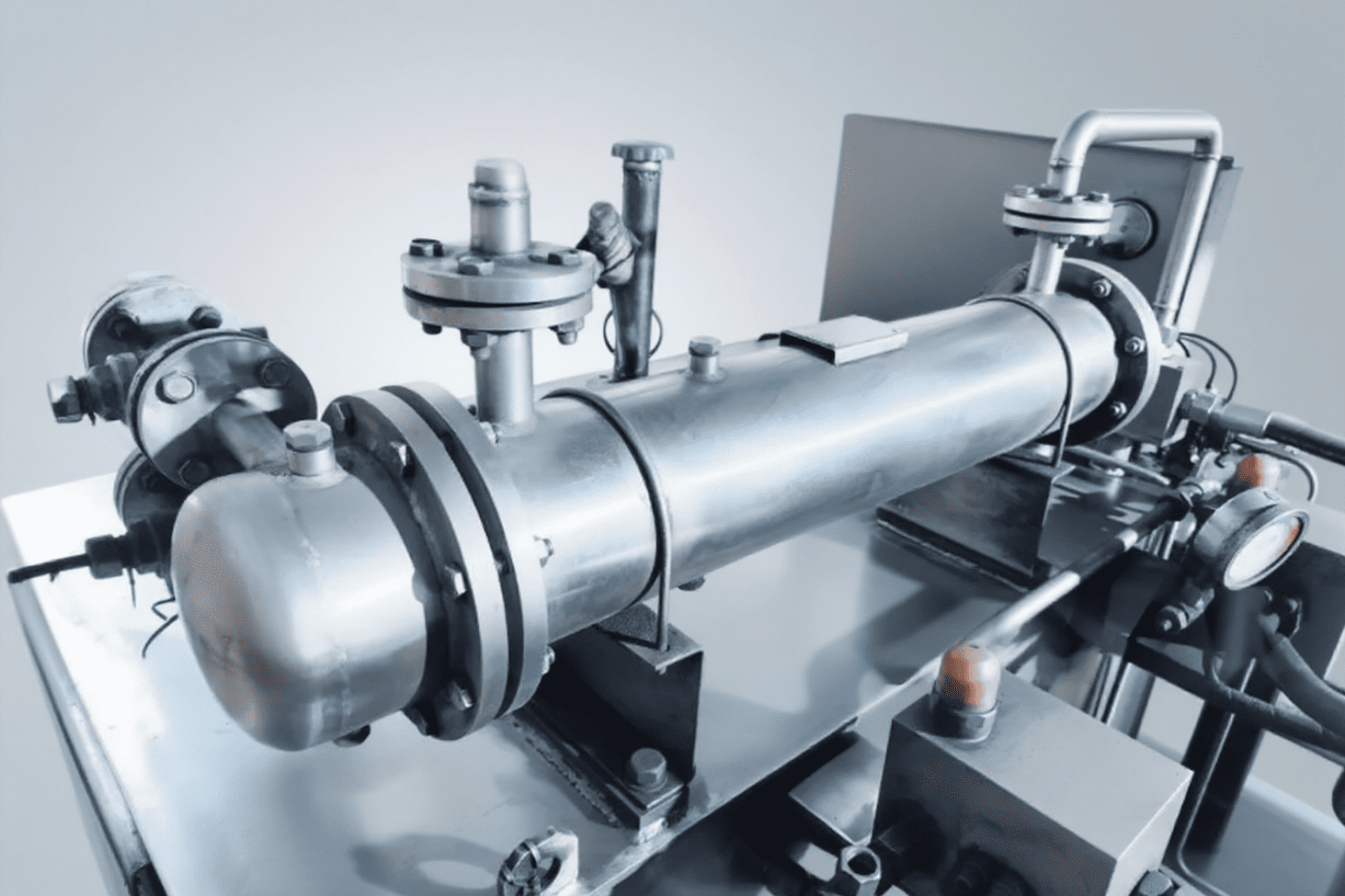
To overcome these shortcomings, microfluidizer technology provides an innovative solution. Its working principle resembles using “ultra-high-pressure scissors” to cut through contamination at the molecular level. The technology has already been applied in Europe, Japan, and China. Among pioneering manufacturers, HiLock has integrated microfluidizer technology specifically for dyeing wastewater treatment, designing advanced high-pressure chambers and durable pumps to ensure stable long-term operation under heavy loads.
The process involves three core steps:
Step 1: Ultra-high-pressure acceleration. Dyeing wastewater is pressurized up to 8–300 MPa (around 3,000 atmospheres) by intensifier pumps, forcing it through narrow Y- or Z-shaped channels called homogenizing chambers at velocities of 100–300 m/s.
Step 2: Triple-force breakdown. Within these chambers, streams collide with each other or strike chamber walls, generating powerful shear, impact, and cavitation forces. Cavitation bubbles collapse and release immense localized energy, fragmenting dye particles down to 5–200 nanometers and breaking molecular bonds of organic contaminants.
Step 3: Enhanced synergy. When paired with oxidants like ozone or Fenton reagents, microfluidizer-generated nanobubbles make chemicals more reactive, improving oxidation efficiency by over 30%.
With this mechanism, microfluidizers can process 10–150 liters per hour, from laboratory batches to industrial-scale operations. More importantly, they precisely control particle size at the nanoscale, offering a reliable pathway for deep dyeing wastewater treatment.
IV. Data-Proven Advantages of Microfluidizer Treatment
Comparative studies from textile plants across multiple countries confirm that microfluidizer-assisted treatment outperforms traditional methods.
● COD reduction: Conventional Fenton achieves ~62%, while microfluidizer + Fenton reaches 91%—a 29% improvement.
● Color removal: Traditional processes reach ~75%; microfluidizer pushes this to 98%.
● Sludge generation: Traditional methods yield ~12 kg per cubic meter, while microfluidizer cuts this to 5 kg—a 58% reduction.
● Cost savings: Traditional treatment costs USD 1.2–2.0 per cubic meter; microfluidizer reduces it to USD 0.8–1.3, saving ~35%.
HiLock has further optimized performance, validating cases in Asia and Europe. By maintaining leading COD and color removal rates while lowering costs by over 30%, HiLock has built replicable, scalable solutions that strengthen its position in the environmental equipment market.
From this data, four advantages of microfluidizer-based dyeing wastewater treatment are evident:
1. Deep purification. Treated COD can drop below 80 mg/L and color concentration ≤30, meeting top-tier standards in the EU, U.S., and China. For example, a German plant reduced COD from 1733 mg/L and color intensity of 844 to compliant levels after 10 cycles.
2. Eco-friendly and cost-effective. Microfluidizer systems harness energy efficiently, lowering costs by 35% and reducing sludge waste.
3. Stable outcomes. Nanometer-level uniformity ensures consistent treatment with variation under 5%, avoiding constant recalibration.
4. Flexible adaptability. Adjustable pressure (8–300 MPa) and cycle counts (8–14 passes) allow treatment of cotton, polyester, silk, and blended fabrics.
V. Ultra-High-Pressure Potential: Opening New Environmental Frontiers
With breakthroughs in ultra-high-pressure engineering, microfluidizer applications in wastewater are expanding globally.
When treatment pressure increases from 8 MPa to 100 MPa, dye molecules break down twice as fast, reducing treatment time to one-third. This boosts efficiency, particularly for Southeast Asia’s small-scale dyeing enterprises. Additionally, microfluidizer systems integrate seamlessly with adsorptive processes like fly ash treatment or with membrane separation, enabling partial reuse of treated water. In Europe, factories are already recycling 30% of treated dyeing wastewater back into production—aligning with global trends in water resource sustainability.
Looking forward, the dyeing wastewater market is projected to grow 8% annually, with microfluidizer technology capturing 15–20% of global share by 2025. HiLock, with its expertise in ultra-high-pressure systems and industry knowledge, is accelerating commercialization. Experts from the International Environmental Technology Association predict: “Within 3–5 years, ultra-high-pressure microfluidizer devices will become standard for mid-to-high-end dyeing factories worldwide.”
Conclusion
From discharge of vividly contaminated “colored wastewater” to effluents transformed into clear, compliant water, microfluidizer technology demonstrates the power of ultra-high pressure in solving one of the toughest global industrial challenges. With rising environmental standards and continuous technical refinement, HiLock is uniquely positioned to help dyeing giants in India, Bangladesh, and China achieve greener production, while also serving Europe and the U.S. with advanced eco-friendly solutions.
By addressing contamination at the molecular level, reducing sludge, and cutting costs, microfluidizer systems will guide the dyeing industry toward a low-carbon, circular, and efficient future. More than a technological upgrade, this represents a new global growth track for environmental sustainability.