

Industry surveys show that more than 60% of consumers think whole grain bread has a “hard and coarse” texture, and nearly 50% admit they reduce purchases because it “spoils too quickly.” These two challenges have long restricted the wider acceptance of whole grain bread in the market.
The Core Technical Challenge: Texture and Freshness
The root cause of poor taste and short shelf life in whole grain bread lies in the properties of its raw materials and the limitations of traditional processing methods.
First, whole grain bread feels rough and has a smaller volume compared to white bread. Whole grain flour contains bran and germ. With conventional methods, bran particle size often exceeds 100 μm, leaving a gritty sensation when chewing. Meanwhile, dough made from whole grain flour has a fermentation expansion rate 25%–30% lower than white flour, leading to denser, harder bread.
Second, whole grain bread stales quickly. The starch in whole grain flour is prone to retrogradation—similar to how cooked rice hardens as it cools. Over time, starch molecules in bread realign, making it dry and firm.
Traditional solutions include adding extra ingredients to strengthen gluten or extending fermentation times. These approaches not only increase cost but also fail to fundamentally solve the twin problems of roughness and rapid staling.
Microfluidizer Technology: The Game-Changing Solution
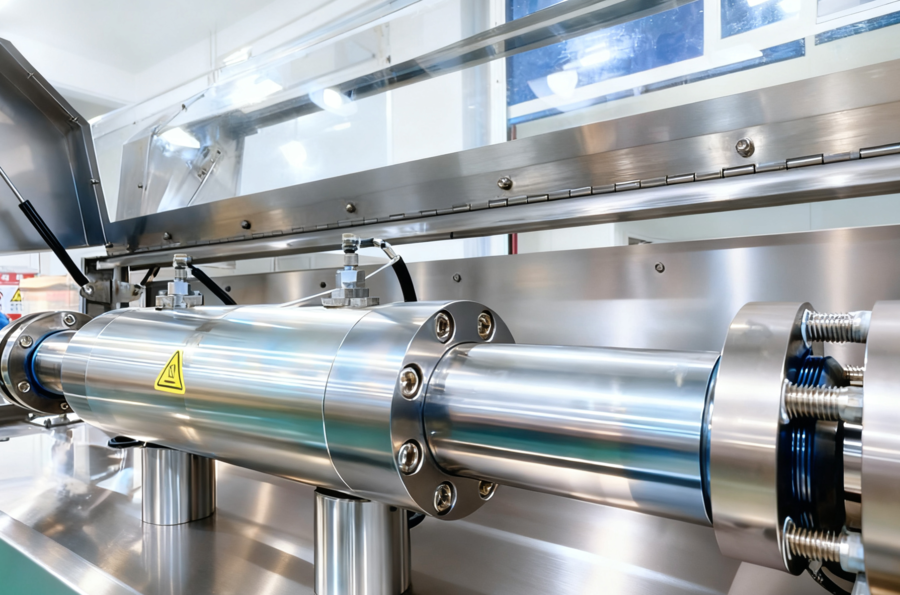
The high pressure Microfluidizer technology offers a breakthrough solution. Simply put, it uses extremely high pressure (100–400 MPa) to force a mixture of whole grain flour and water through microchannels only tens of microns wide. During this process, the mixture undergoes intense collision and shear, achieving an “optimized transformation” of whole grain flour that enhances bread quality from the ground up.
● Finer Bran Particles
The Microfluidizer reduces bran size from over 100 μm (traditional processing) down to just 10–20 μm. This dramatic size reduction eliminates the coarse, gritty mouthfeel, allowing whole grain bread to deliver a smoother bite.
● Improved Starch Structure and Water Absorption
The high-pressure shear alters starch properties, enabling it to absorb 5%–10% more water. As a result, dough retains more moisture, and baked whole grain bread achieves a softer and fluffy texture, much closer to that of white bread.
● Stronger Gluten Network
The process enhances the gluten matrix, forming a tighter, more resilient structure. This is like adding protective “shields” around tiny air pockets, locking in more gas during fermentation. The outcome is lighter, more voluminous whole grain bread with a delightfully fluffy texture.
Case Study: Real-World Results
A baking company applied the HiLock 300 MPa Microfluidizer to its production line. The results were striking:
● Average bran particle size dropped to just 18 μm.
● The proportion of consumers who no longer felt a rough texture rose from 32% to 89%.
● Bread hardening slowed by 50%, extending shelf life at room temperature to 12 days—nearly double the 3–7 days of conventional methods.
● Importantly, no extra additives were required, and production costs fell by 8%–10%.
In other words, the Microfluidizer not only improved the fluffy texture of whole grain bread, but also delivered cost savings and longer freshness.
Advantages and Industry Outlook
Compared with conventional approaches, the high pressure Microfluidizer delivers three major advantages for whole grain bread production:
Comprehensive Quality Improvement
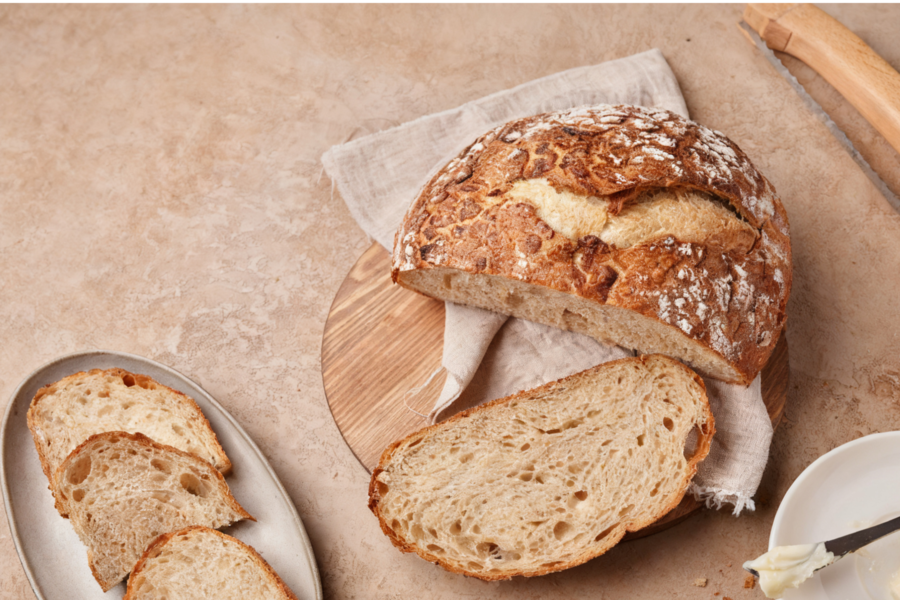
Bread becomes softer (hardness reduced by 35%), more voluminous (20% increase in loaf volume), and retains more nutrients. The retention rate of B vitamins improves from 65% to 88%, making the bread not only tastier but also healthier.
Efficiency and Cost Control
The Microfluidizer supports continuous production. It can process 500 kg of raw material per hour, reducing the production cycle from 36 hours to just 18 hours. This efficiency ensures that high-quality whole grain bread can be produced at scale with manageable costs.
Safe and Environmentally Friendly
The process relies purely on physical forces without chemical additives, perfectly aligning with the health-conscious positioning of whole grain bread.
By 2025, the healthy bread market is projected to surpass 180 billion RMB, with whole grain products growing at an annual rate of 63%. In this booming sector, the Microfluidizer provides the exact technological edge needed to deliver fluffy texture, extended shelf life, and higher consumer satisfaction.
Beyond Bread: Expanding Potential
The benefits of Microfluidizer technology go beyond just whole grain bread. It can be combined with other processes to develop innovative health products. For example, probiotics can be encapsulated within special carriers and added to bread dough. Even under high baking temperatures, up to 68% of probiotics survive, creating bread with added gut health benefits.
This opens exciting new opportunities for bakeries to create premium whole grain bread products—soft, flavorful, nutrient-rich, and long-lasting, while also carrying functional health advantages.
A Healthier, Tastier Future
High pressure Microfluidizer technology solves the long-standing challenge of “unpleasant taste” in whole grain bread while extending its shelf life. By producing finer bran, enhancing starch hydration, and strengthening gluten, the technology delivers a light, soft, and fluffy texture without additional ingredients.
For consumers, this means whole grain bread that is finally as enjoyable to eat as it is healthy. For the baking industry, it means higher efficiency, reduced costs, and the ability to compete in the rapidly growing health food market.
The Microfluidizer is not just a tool for making whole grain bread more palatable—it is an innovation that elevates the entire baking sector toward healthier, higher-quality products. With its proven benefits and vast potential, this technology is set to shape the future of the whole grain bread industry worldwide.